From the Military to the Fire Service
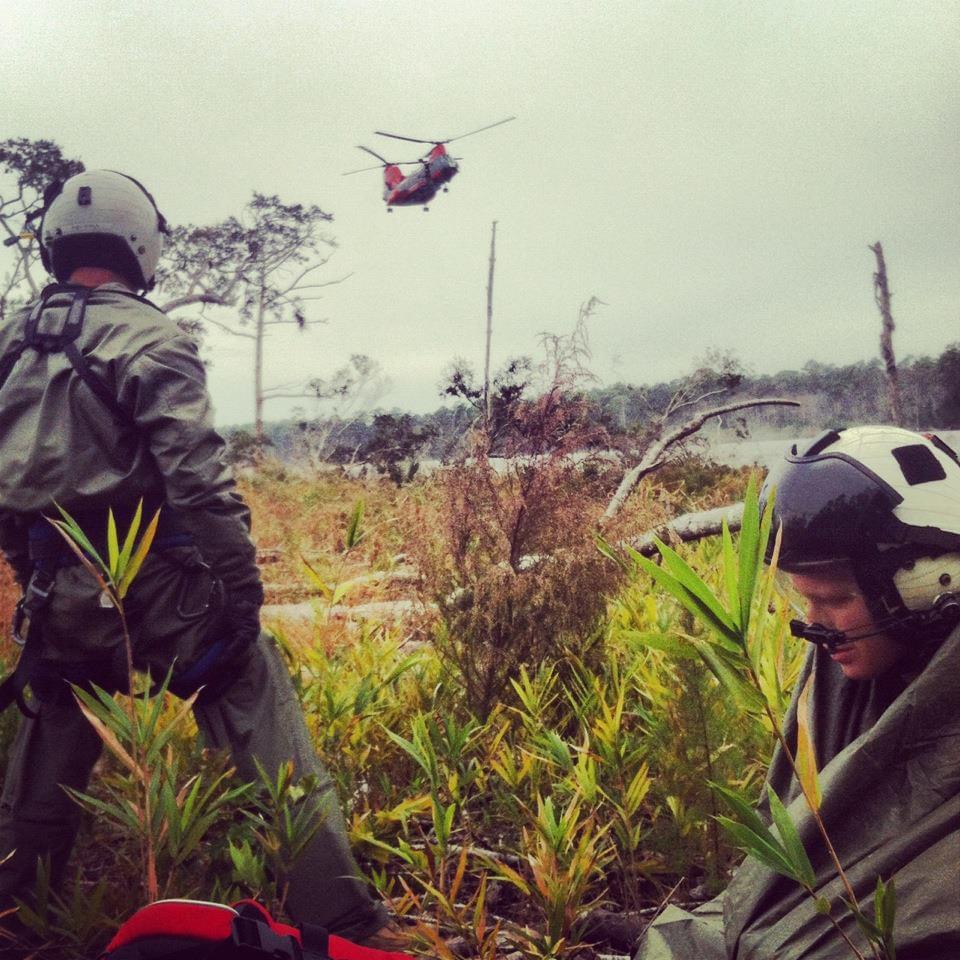
You already did the hard part: you showed up when it mattered, you worked inside a chain of command, and you didn't quit when things got heavy. The fire service runs on the same things. This guide breaks down why departments actively want veterans, and exactly which benefits and programs exist to help you make the jump — with the caveat that benefit rules change and vary by jurisdiction, so treat the specifics here as a starting point, not the final word.
Read this first: Tailboard Academy is an independent, privately-built resource. It is not affiliated with, endorsed by, or operated by the VA, DoD, any military branch, or any fire department. Nothing here guarantees you'll be hired, qualify for a benefit, pass a test, or receive a specific dollar amount. Program rules, funding levels, and eligibility change — always confirm current details directly with the VA, your branch's education or transition office, or the hiring department before you make decisions based on them.
Why Fire Departments Actually Want Veterans
This isn't a recruiting slogan — it's what shows up in the job itself:
- You've operated under real stress with incomplete information. Fire and EMS calls are chaotic. Departments want people who've already proven they can think and act when things go sideways, not people encountering high-stress decision-making for the first time.
- You understand rank structure and following orders you didn't give. A fire company is quasi-military by design — a captain gives an order on the fireground, and there's no time for a debate. Veterans already get this.
- You've trained to standards, not to a feeling. Fire departments run on checklists, SOPs, and repetition (hose evolutions, SCBA drills, driver training). If you came up through military training pipelines, that muscle is already built.
- Physical readiness is a baseline expectation, not a novelty. You've likely already sustained work capacity under load, heat, and fatigue — which is most of what the CPAT and academy PT are testing for.
- You've worked on a team where the mission mattered more than your individual credit. Firefighting is a crew job. Nobody promotes the guy who freelances.
None of that guarantees a job. Departments still test, interview, and background-check everyone the same way. But it's why recruiters and chiefs consistently say veteran candidates tend to be strong hires — and it's why the programs below exist.
Hiring Advantages: Veterans' Preference
There are two different systems here — don't confuse them.
Civil-Service (State/Local) Veterans' Preference
Most municipal and county fire departments hire through a civil-service system, and most states and localities award some form of veterans' preference in that process — commonly extra points added to a written or oral exam score, or a preference in breaking ties on a hiring list. Some jurisdictions limit this to combat-era veterans, some give a larger bump to service-connected disabled veterans, and some apply it differently depending on whether it's a promotional or entry-level list.
The honest catch: there is no single national rule. Preference points, eligibility windows, and how they're applied are set by each state and, often, each city or county civil-service commission — including in California. Do not assume a number or a rule from one department applies to another.
What to do: before you test, ask the specific department's HR or civil-service office directly: "Do you award veterans' preference points, how many, and what documentation do you need (usually your DD-214)?" Get it in writing or from their official testing bulletin.
Federal Veterans' Preference (for Federal Firefighter Jobs)
If you're targeting a federal fire department (military installations, VA medical centers, national parks, federal wildland agencies — GS-0081 Firefighter series), a real, standardized system does apply: federal veterans' preference under 5 U.S.C. § 2108, administered under OPM rules.
| Category | Who qualifies | What it does |
|---|---|---|
| 5-point preference (TP) | Active duty during a qualifying war/campaign period, or a campaign/expeditionary medal, or more than 180 consecutive days of active duty (other than training) during specified periods including the post-9/11 era | Adds 5 points to a passing exam score, or preference within a ratings category |
| 10-point preference (XP / CP / CPS) | Any veteran with a service-connected disability, or a Purple Heart recipient, regardless of disability rating | Adds 10 points; veterans with a compensable rating of 10%+ are placed at the top of the referral list under category-rating systems |
| 0-point / Sole Survivorship (SSP) | Discharged as the only surviving child in a family where a parent or sibling died, was permanently disabled, or is MIA in service | Listed ahead of non-preference candidates with the same score, no points added |
Veterans' preference does not guarantee a job and doesn't apply to internal actions like promotions or transfers — it applies to initial hiring in the competitive service. You'll need your DD-214 (and an SF-15 if claiming 10-point preference) as documentation. There are also standalone non-competitive hiring authorities worth knowing — the Veterans Recruitment Appointment (VRA), the 30% or More Disabled Veteran authority, and the Veterans Employment Opportunities Act (VEOA), which lets eligible veterans compete for jobs otherwise limited to current federal employees.
Education and Training Benefits (VA)
These are the benefits that pay for fire academies, EMT/paramedic programs, and fire science degrees. Verify current rates, months of eligibility, and your personal situation directly at VA.gov before enrolling anywhere — every one of these numbers depends on your individual service record.
Post-9/11 GI Bill (Chapter 33)
What it is: The most-used education benefit for post-9/11-era veterans. What it covers: full in-state public tuition and fees (capped rates for private/foreign schools), a monthly housing allowance if you're enrolled more than half-time, up to $1,000/year for books and supplies, reimbursement for licensing and certification exams and prep courses, and tutorial assistance.
How vets use it for fire/EMS: it pays for private fire academies, EMT-Basic through paramedic programs, non-college-degree vocational training, on-the-job training/apprenticeships, and fire science associate's or bachelor's degrees. It also directly reimburses the cost of your EMT, paramedic, or Firefighter I/II certification exams — a real and often-missed benefit.
Eligibility (general): at least 90 days of active duty on or after September 11, 2001 (or 30 continuous days plus a service-connected-disability discharge, or a Purple Heart). You typically get up to 36 months of benefits; some veterans with two or more separate qualifying periods of service may now qualify for up to 48 months following a 2024 Supreme Court decision (Rudisill) — this is a recent, evolving area, so confirm your specific entitlement with VA.
Expiration: if your service ended before January 1, 2013, benefits expire 15 years after your last separation. If your service ended on or after that date, the "Forever GI Bill" removed the expiration date entirely.
Montgomery GI Bill (MGIB)
What it is: the predecessor to the Post-9/11 GI Bill, still relevant for some veterans. Active Duty (Chapter 30): up to 36 months of a fixed monthly education payment for those who served at least 2 years and (historically) opted in with a service pay reduction. Selected Reserve (Chapter 1606): up to 36 months for qualifying Reserve/Guard service.
How vets use it: same general purposes as Chapter 33 (school, training, certification), but paid as a flat monthly amount rather than tuition-plus-housing. Most veterans eligible for both must choose one — you generally can't use both benefits for the same period of service. This is a genuinely complex decision (especially with the Rudisill changes above) — talk to a VA education counselor or your school's certifying official before choosing.
Veteran Readiness & Employment / VR&E (Chapter 31)
What it is: for veterans with a service-connected disability that limits or prevents them from working. It's not primarily a school-payment program — it's a full employment-services program.
How vets use it for fire/EMS: VR&E counselors can fund a fire academy, EMT/paramedic program, or fire science degree as part of an individualized employment plan, and the program includes case management, job placement help, on-the-job training and apprenticeship placement, and (in some tracks) a subsistence allowance while you train. It's built around exploring what job is actually suitable given your disability — for some veterans that's structural firefighting; for others it points toward EMS, dispatch, fire prevention/inspection, or another public-safety-adjacent path.
How to start: apply with VA Form 28-1900, or work through a VA regional office.
DoD SkillBridge — Train While You're Still In Uniform
This is the one most veterans don't find out about until it's too late to use it.
What it is: in roughly your last 180 days of active-duty service, your command can authorize you for "permissive duty" — meaning you're released from your normal military duties, full-time, to train or intern with an approved civilian organization, while you continue drawing full military pay and benefits. It costs the employer nothing; DoD keeps paying you.
How it applies to fire service: because SkillBridge is just a training/internship authorization, not a fixed list of employers, it has been used by transitioning service members to attend a civilian fire academy, and in some cases to complete a department's academy and probationary period, in the final months before their military separation — meaning some veterans have effectively started their fire department career while still technically active duty. This depends entirely on your command approving it and a receiving department or training partner being willing to structure it as a SkillBridge placement — it is not automatic and not guaranteed.
Who can use it: SkillBridge is DoD-wide — available to eligible service members in every branch, subject to your chain of command's and a field-grade commander's written approval. Since its 2011 start, it has moved over 50,000 service members through partner organizations.
Bottom line: if you're within about a year of separating, ask your career counselor or transition office about SkillBridge early — eligibility windows and command approval take lead time, and not every department or fire training program participates. Confirm current program status and application steps at skillbridge.mil.
Which fire departments, academies and EMS agencies actually take SkillBridge members: we pulled every fire and EMS provider with an approved listing out of the SkillBridge database and keep them on one page, Southern California and Camp Pendleton first, with a link to each one. SkillBridge providers in fire and EMS
Branch Transition and Credentialing Programs
TAP (Transition Assistance Program)
What it is: a mandatory, interagency transition program (run jointly by DoD, VA, Department of Labor, Department of Education, DHS, SBA, and OPM) for all separating service members. It's mandatory if you've served 180 or more continuous days on active duty. It typically starts about 1 year before separation, or 2 years before retirement, and covers benefits briefings, resume and job-search prep, and a VA benefits overview.
Why it matters here: TAP is where most veterans first hear about GI Bill options, SkillBridge, and COOL — but you don't have to wait for your TAP class to start researching. Start earlier if you already know fire service is the goal.
COOL (Credentialing Opportunities On-Line)
What it is: a DoD program, with a service-specific site for each branch, that helps match your military job to relevant civilian certifications and licenses — and in many cases helps fund the exam fee (and sometimes prep materials) for certifications tied to your military occupational specialty.
| Branch | Has a COOL program | Relevant to fire/EMS |
|---|---|---|
| Army | Yes (Army COOL) | Funds EMT, AEMT, and National Registry Paramedic (NRP) exams for relevant MOSs (e.g., 68W medics); the 12M Firefighter MOS has its own credential track |
| Navy | Yes (Navy COOL) | EMT/AEMT credentials listed for eligible ratings; funding for a given exam is not guaranteed every fiscal year — check current availability directly with Navy COOL |
| Air Force / Space Force | Yes (Air Force COOL) | 3E7X1 Fire Protection specialists train toward DoD Firefighter I & II (IFSAC/Pro Board) and emergency medical responder-level credentials as part of the career field |
| Marine Corps | Yes (Marine Corps COOL) | MOS 7051, Expeditionary Firefighting and Rescue (EFR) Specialist, has a listed credential track |
| Coast Guard | Yes (Coast Guard Credentialing Online) | Branch-specific; check directly for current fire/EMS-relevant credentials |
The honest catch: funding availability, dollar caps, and the list of approved credentials change year to year and branch to branch — one branch may fully fund an EMT exam one fiscal year and have no funding allocated the next. Don't build a plan around a specific dollar figure without confirming it's currently funded with your branch's COOL office first.
Reading about the oral board is step one. Sitting one is the rest. Tailboard runs a live panel that asks real follow-ups and scores you like a real board. Run one free, no card.
Military Firefighting Experience That Transfers
If you served as a military firefighter, you may already be most of the way there. The Department of Defense operates its own fire and emergency services, and DoD's own credentialing standard requires IFSAC or Pro Board–accredited certifications — the same accrediting bodies most U.S. civilian fire departments recognize (per DoD Manual 6055.06, DoD Fire and Emergency Services).
- Army 12M — Firefighter. A dedicated Firefighter MOS with its own credential track under Army COOL.
- Air Force / Space Force 3E7X1 — Fire Protection. Structural and aircraft rescue firefighting (ARFF), trained at Goodfellow AFB, working toward DoD Firefighter I & II and related certifications.
- Marine Corps 7051 — Expeditionary Firefighting and Rescue (EFR) Specialist. Listed under Marine Corps COOL with its own credential path.
- Navy and other aircraft-rescue/damage-control roles. Sailors and Marines with shipboard damage-control or aircraft rescue firefighting experience carry real, relevant hands-on skill — but unlike the Army, Air Force, and Marine Corps, the Navy does not run a single dedicated "firefighter" rating in the same structure, so how that experience is documented and certified varies by your specific command and assignment. Talk to your training office about what DoD-recognized certifications you can walk away with.
The practical takeaway: if any of this applies to you, find out now, while you're still in uniform, exactly which IFSAC/Pro Board certifications you're eligible to test for or already hold — those transfer to civilian departments far more easily than trying to reconstruct your training record after you separate.
Putting It Together
There's no single "right" path, but a common shape looks like this: start researching benefits and eligibility as early as possible (ideally a year-plus before separation), get honest information from TAP and your branch's education/transition office, find out if you're within a SkillBridge-eligible window and whether a fire academy or department will work with it, and use the GI Bill or VR&E to close any remaining gap in certifications once you're out. If you served as a military firefighter, get your certifications and records in order before you separate — don't wait.
None of this is a guarantee of hiring or benefit eligibility. It's a map of what exists. Confirm the current, personal details with the VA, your branch's education office, and the hiring department before you commit time or money to a plan.
Resources
- Post-9/11 GI Bill (Chapter 33) — VA.gov
- Montgomery GI Bill Active Duty (MGIB-AD) — VA.gov
- Montgomery GI Bill Selected Reserve (MGIB-SR) — VA.gov
- Veteran Readiness and Employment (Chapter 31) — VA.gov
- DoW SkillBridge — official program site
- DoD Transition Assistance Program (TAP)
- VA Transition Assistance Program
- DoD COOL Portal (hub for all branch COOL sites)
- Federal Veterans' Preference — OPM FedsHireVets
- Veterans' Preference — U.S. Department of Labor
- USAJOBS — Veterans hiring information
Sources
- VA.gov — Post-9/11 GI Bill (Chapter 33)
- VA.gov — Montgomery GI Bill Active Duty
- VA.gov — Montgomery GI Bill Selected Reserve
- VA.gov — Veteran Readiness and Employment (Chapter 31)
- skillbridge.mil — Program Overview
- dodtap.mil — DoD Transition Assistance Program
- benefits.va.gov — VA Transition Assistance
- cool.osd.mil — DoD COOL Portal
- cool.osd.mil — Army COOL, 12M Firefighter MOS
- cool.osd.mil — Army COOL, EMT credential
- cool.osd.mil — Navy COOL, EMT credential
- cool.navy.mil — Marine Corps COOL, MOS 7051 EFR Specialist
- forcecom.uscg.mil — Coast Guard Credentialing Online (COOL)
- opm.gov/fedshirevets — Veterans and Transitioning Service Members
- esd.whs.mil — DoD Manual 6055.06, DoD Fire and Emergency Services